


Vegetable oils
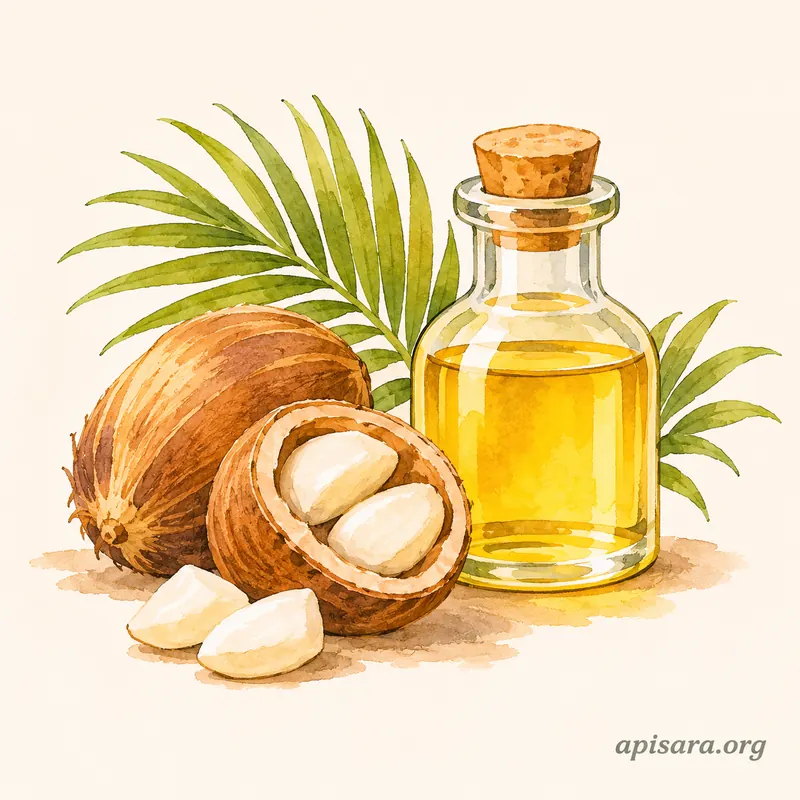
Babassu oil
Technical sheet for soapmaking: INCI name, saponification values (SAP), iodine value, fatty-acid profile and practical notes, from the APISARA calculator data.
- INCI: Orbignya Oleifera Seed Oil
- SAP NaOH 0.175
Particularities & precautions
Teaching advice written for APISARA, separate from the sourced figures.
Lauric oil often used as a coconut substitute.
Sourced figures
| Data | Value | Unit |
|---|---|---|
| SAP NaOH | 0.175 | g NaOH / g |
| SAP KOH | 0.245 | g KOH / g |
| Iodine value | 15 | |
| INS | 230 |
Units: g of alkali per g of fat; that is 174.7 mg NaOH/g and 245.0 mg KOH/g.
Data source: SoapCalc table via Soapee: "Babassu Oil". Fat data: SoapCalc oil table (average values), redistributed by the public-domain Soapee project. Always check your supplier’s documents.
Fatty-acid profile
| Fatty acid | Notation | % | Share |
|---|---|---|---|
| Lauric | C12:0 | 50 % | |
| Myristic | C14:0 | 20 % | |
| Palmitic | C16:0 | 11 % | |
| Stearic | C18:0 | 4 % | |
| Oleic | C18:1 | 10 % |
Documented fatty acids: 95 % of the total. Unknown: 5 % of the fatty acids are not documented by the source; they are not estimated.
What the profile says (calculated)
Calculated by APISARA from the sourced fatty-acid profile above; no other data is used.
- Rich in lauric and myristic acids (70 %): brings lather and cleansing power; above about a third of the oils it can dry the skin.
Estimated soapmaking properties
Values for a soap made with 100 % of this ingredient (indicative). Compare them with the usual ranges in Quality.
| Hardness | 85 |
|---|---|
| Cleansing | 70 |
| Mildness | 10 |
| Bubbly lather | 70 |
| Lather stability | 15 |
In a recipe, what counts is the blend: see the Quality screen.